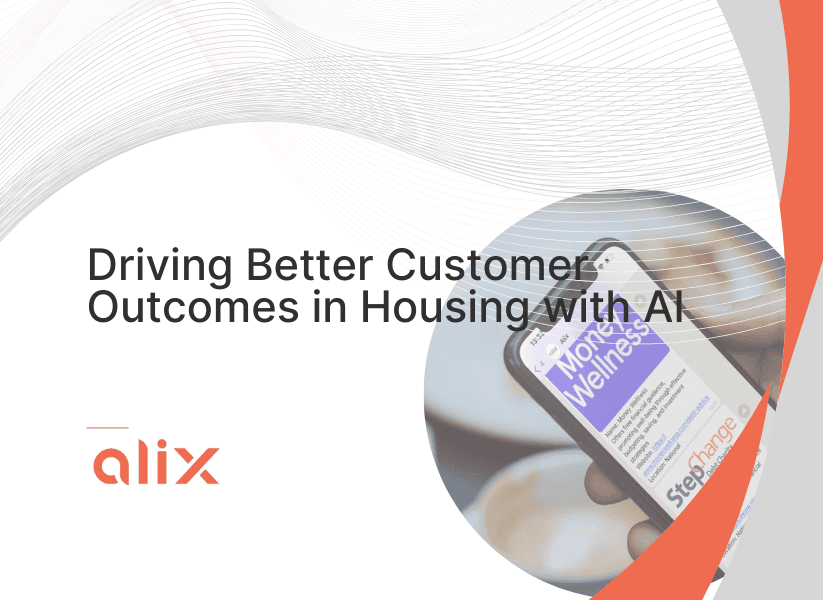
Driving Better Customer Outcomes in Housing with AI

Driving Better Customer Outcomes in Housing with AI

Driving Better Customer Outcomes in Housing with AI

Articles

Dec 15, 2025

12/15/25

4 Min Read

Find out how an AI-powered digital concierge helps housing providers connect residents to local support and community services in a more inclusive and accessible way.

Find out how an AI-powered digital concierge helps housing providers connect residents to local support and community services in a more inclusive and accessible way.

Find out how an AI-powered digital concierge helps housing providers connect residents to local support and community services in a more inclusive and accessible way.

Housing providers are increasingly looking for better ways to support residents.


Project Alix’s partnership with Peabody Trust has shown how technology can act as a bridge, helping people feel more connected to the place they live and the community around them. Through this collaboration Project Alix developed a digital concierge tool that utilises AI technology to deliver information about local initiatives and community support in the style of a local newsletter. The tool is accessible to all residents as it is hosted on a WhatsApp based platform in a chat format.


This project has highlighted how much potential there is in moving from a simple digital directory to something far more intuitive, personal and genuinely useful in everyday life.

The aim of the AI concierge is to make the search for community, support and local information easier and more accessible to everyone. Instead of expecting people to hunt through hundreds of websites or apps, the service brings information directly to you in a way that feels natural to use. Finding out what support is available becomes something that fits smoothly into people’s routines rather than another task on the to do list.


This kind of model can also help reach the seldom heard voices who are often excluded from community life. Some are juggling busy jobs and family responsibilities. Others have low digital confidence or feel overwhelmed by complex modern technology. Many face language barriers and accessibility needs, or simply don’t know where to start. An AI concierge removes some of these barriers by offering a low-pressure way to get support or share views through familiar channels such as WhatsApp.


Another important element of this approach is helping residents discover what is already available in their local area. Communities are full of brilliant initiatives that often remain hidden. The Pantry, run by Cook for Good, is a great example. It supports people experiencing food poverty in a way that protects their dignity and choice. When information about schemes like this is made easy to find and access, people are far more likely to benefit from support they may never have realised existed.


Technology plays a central role in making services more inclusive. Translation features open the door for people who are not confident in English. Voice and audio options support residents with dyslexia, literacy challenges or visual impairments. This is also helpful for those who simply prefer to listen rather than read, especially when they are on the move or managing a busy day.


Another strength of these tools, especially those based on Whatsapp, is ease with with they can be used. If responding is quick and straightforward, people are far more likely to engage. Issues get resolved faster, and residents spend less time navigating complex systems. This is especially helpful for those who struggle with traditional digital platforms.


The work Project Alix has done integrating the concierge tool also fits closely with Golding’s customer strategy and the goals set out in its corporate plan. The partnership with Project Alix supports the ambition to deliver excellent customer service by providing tools that feel simple and intuitive. It has strengthened the Golding’s ability to support residents throughout the whole span of their tenancy, from the moment they move in to the point they leave. By taking part in the pilot, Golding not only gains the technology itself but also the opportunity to build stronger and more trusting relationships with residents. The approach helps customers stay informed, find support when they need it and feel reassured that their landlord is acting in a proactive and rather than reactive way. It also expands the organisation’s digital-first communication style and responds directly to what customers say matters most: clear signposting to support and more flexible digital options.

Housing providers are increasingly looking for better ways to support residents.


Project Alix’s partnership with Peabody Trust has shown how technology can act as a bridge, helping people feel more connected to the place they live and the community around them. Through this collaboration Project Alix developed a digital concierge tool that utilises AI technology to deliver information about local initiatives and community support in the style of a local newsletter. The tool is accessible to all residents as it is hosted on a WhatsApp based platform in a chat format.


This project has highlighted how much potential there is in moving from a simple digital directory to something far more intuitive, personal and genuinely useful in everyday life.

The aim of the AI concierge is to make the search for community, support and local information easier and more accessible to everyone. Instead of expecting people to hunt through hundreds of websites or apps, the service brings information directly to you in a way that feels natural to use. Finding out what support is available becomes something that fits smoothly into people’s routines rather than another task on the to do list.


This kind of model can also help reach the seldom heard voices who are often excluded from community life. Some are juggling busy jobs and family responsibilities. Others have low digital confidence or feel overwhelmed by complex modern technology. Many face language barriers and accessibility needs, or simply don’t know where to start. An AI concierge removes some of these barriers by offering a low-pressure way to get support or share views through familiar channels such as WhatsApp.


Another important element of this approach is helping residents discover what is already available in their local area. Communities are full of brilliant initiatives that often remain hidden. The Pantry, run by Cook for Good, is a great example. It supports people experiencing food poverty in a way that protects their dignity and choice. When information about schemes like this is made easy to find and access, people are far more likely to benefit from support they may never have realised existed.


Technology plays a central role in making services more inclusive. Translation features open the door for people who are not confident in English. Voice and audio options support residents with dyslexia, literacy challenges or visual impairments. This is also helpful for those who simply prefer to listen rather than read, especially when they are on the move or managing a busy day.


Another strength of these tools, especially those based on Whatsapp, is ease with with they can be used. If responding is quick and straightforward, people are far more likely to engage. Issues get resolved faster, and residents spend less time navigating complex systems. This is especially helpful for those who struggle with traditional digital platforms.


The work Project Alix has done integrating the concierge tool also fits closely with Golding’s customer strategy and the goals set out in its corporate plan. The partnership with Project Alix supports the ambition to deliver excellent customer service by providing tools that feel simple and intuitive. It has strengthened the Golding’s ability to support residents throughout the whole span of their tenancy, from the moment they move in to the point they leave. By taking part in the pilot, Golding not only gains the technology itself but also the opportunity to build stronger and more trusting relationships with residents. The approach helps customers stay informed, find support when they need it and feel reassured that their landlord is acting in a proactive and rather than reactive way. It also expands the organisation’s digital-first communication style and responds directly to what customers say matters most: clear signposting to support and more flexible digital options.

Housing providers are increasingly looking for better ways to support residents.


Project Alix’s partnership with Peabody Trust has shown how technology can act as a bridge, helping people feel more connected to the place they live and the community around them. Through this collaboration Project Alix developed a digital concierge tool that utilises AI technology to deliver information about local initiatives and community support in the style of a local newsletter. The tool is accessible to all residents as it is hosted on a WhatsApp based platform in a chat format.


This project has highlighted how much potential there is in moving from a simple digital directory to something far more intuitive, personal and genuinely useful in everyday life.

The aim of the AI concierge is to make the search for community, support and local information easier and more accessible to everyone. Instead of expecting people to hunt through hundreds of websites or apps, the service brings information directly to you in a way that feels natural to use. Finding out what support is available becomes something that fits smoothly into people’s routines rather than another task on the to do list.


This kind of model can also help reach the seldom heard voices who are often excluded from community life. Some are juggling busy jobs and family responsibilities. Others have low digital confidence or feel overwhelmed by complex modern technology. Many face language barriers and accessibility needs, or simply don’t know where to start. An AI concierge removes some of these barriers by offering a low-pressure way to get support or share views through familiar channels such as WhatsApp.


Another important element of this approach is helping residents discover what is already available in their local area. Communities are full of brilliant initiatives that often remain hidden. The Pantry, run by Cook for Good, is a great example. It supports people experiencing food poverty in a way that protects their dignity and choice. When information about schemes like this is made easy to find and access, people are far more likely to benefit from support they may never have realised existed.


Technology plays a central role in making services more inclusive. Translation features open the door for people who are not confident in English. Voice and audio options support residents with dyslexia, literacy challenges or visual impairments. This is also helpful for those who simply prefer to listen rather than read, especially when they are on the move or managing a busy day.


Another strength of these tools, especially those based on Whatsapp, is ease with with they can be used. If responding is quick and straightforward, people are far more likely to engage. Issues get resolved faster, and residents spend less time navigating complex systems. This is especially helpful for those who struggle with traditional digital platforms.


The work Project Alix has done integrating the concierge tool also fits closely with Golding’s customer strategy and the goals set out in its corporate plan. The partnership with Project Alix supports the ambition to deliver excellent customer service by providing tools that feel simple and intuitive. It has strengthened the Golding’s ability to support residents throughout the whole span of their tenancy, from the moment they move in to the point they leave. By taking part in the pilot, Golding not only gains the technology itself but also the opportunity to build stronger and more trusting relationships with residents. The approach helps customers stay informed, find support when they need it and feel reassured that their landlord is acting in a proactive and rather than reactive way. It also expands the organisation’s digital-first communication style and responds directly to what customers say matters most: clear signposting to support and more flexible digital options.

Ready to Transform Your Damp and Mould Response?

Take the next step towards smarter customer engagement, better compliance and more responsive operations.

Subscribe to the newsletter

Join Community of

500+ Pros.

ProjectAlix.com

Project Alix Ltd, Headmistresses’ Office, 5 Buck Street, London, NW1 8NJ

Ready to Transform Your Damp and Mould Response?

Take the next step towards smarter customer engagement, better compliance and more responsive operations.

Subscribe to the newsletter

Join Community of

500+ Pros.

ProjectAlix.com

Project Alix Ltd, Headmistresses’ Office, 5 Buck Street, London, NW1 8NJ

Ready to Transform Your Damp and Mould Response?

Take the next step towards smarter customer engagement, better compliance and more responsive operations.

Subscribe to the newsletter

Join Community of

500+ Pros.

ProjectAlix.com

Project Alix Ltd, Headmistresses’ Office, 5 Buck Street, London, NW1 8NJ